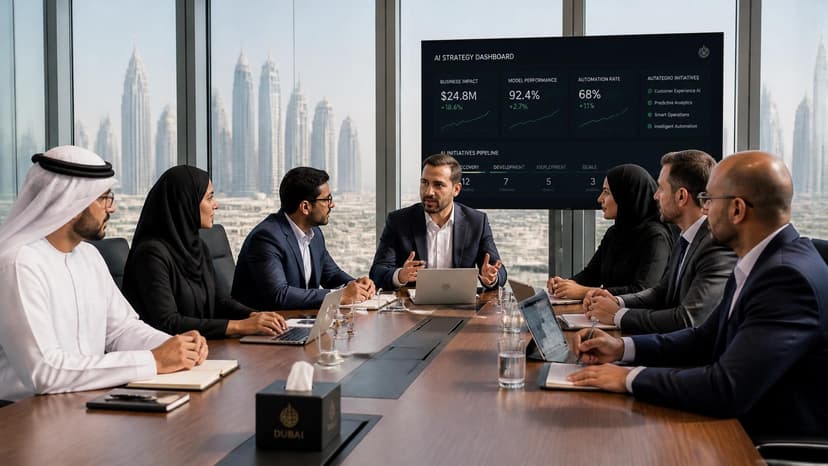
How to Integrate AI Strategy With Executive Coaching for Digital Transformation
Digital transformation is no longer a choice; it is a prerequisite for survival. However, many organizations face a common bottleneck: the gap between a robust AI Strategy and the leadership’s ability to execute it. Technology moves at exponential speeds, but human behavior often changes at a linear pace. To bridge this gap, forward-thinking organizations are […]
Exceed Insights
Digital transformation is no longer a choice; it is a prerequisite for survival. However, many organizations face a common bottleneck: the gap between a robust AI Strategy and the leadership’s ability to execute it. Technology moves at exponential speeds, but human behavior often changes at a linear pace.
To bridge this gap, forward-thinking organizations are integrating Executive Coaching with their AI implementation plans. This synergy ensures that leaders are not just "using" tools, but are evolving their mindsets to navigate a machine-augmented world.
The Strategic Convergence: AI and Leadership
The failure of most digital transformations: often cited as high as 70%: rarely stems from the software itself. It stems from a lack of cultural readiness and leadership alignment. Integrating coaching into your AI roadmap addresses the human element of change management directly.
Why Coaching is Essential for AI Adoption
Mitigating Resistance: AI often triggers fear of obsolescence. Coaching helps leaders process this transition.
Decision-Making: AI provides the data; leaders provide the Judgment. Coaching refines that judgment.
Scalability: When leaders are coached to embrace AI, that mindset trickles down to every layer of the organization.
Phase 1: Strategic Alignment and Shared Language
Before deploying algorithms, leadership teams must align on the "Why." At Exceed, we emphasize that AI Strategy must be translated into a shared language that avoids technical jargon and focuses on value creation.
Key Steps for Alignment:
Facilitated Workshops: Move beyond the IT department. Bring the C-suite together to define what AI success looks like for the bottom line.
Defining the North Star: Establish a clear vision of how AI will enhance, not replace, the human talent in your organization.
Governance Frameworks: Particularly in the GCC, establishing clear governance and Family Business succession protocols is vital when introducing disruptive technology.
Challenge your colleague: Ask your CTO and COO to define "Digital Transformation" in one sentence. If their answers differ, you have an alignment gap.
Phase 2: Personalizing Executive Development at Scale
Traditional Executive Coaching used to be a luxury reserved for the top three individuals in a company. AI has democratized this, allowing for high-impact development across the entire management tier.
The Role of Intelligent Coaching Systems
Modern platforms now analyze performance data, 360-degree feedback, and even communication patterns to provide real-time guidance.
Assessment-Driven Growth: AI-driven Leadership Assessments identify blind spots that a human coach might miss over months of observation.
Real-Time Nudges: Imagine receiving a notification before a high-stakes board meeting, reminding you of your goal to be more "inclusive in decision-making" based on your previous coaching sessions.
Scenario Simulation: AI allows leaders to rehearse difficult conversations: such as announcing a restructuring or negotiating a major contract: in a safe, simulated environment.
Implementation Selection:
Frequency: Daily nudges vs. Monthly deep dives.
Focus Area: Communication, Strategic Thinking, or Emotional Intelligence.
Platform: Web-based, Mobile App, or Integrated Slack/Teams bot.
Phase 3: The Human-AI Partnership Model
While AI provides the data and the scale, the Human Coach provides the nuance, empathy, and ethical grounding. This hybrid model is the gold standard for modern Executive Education.
Efficiency vs. Judgment
AI Handles: Data analysis, scheduling, pattern recognition, and 24/7 availability.
Humans Handle: Moral dilemmas, cultural nuances, empathy, and complex relationship management.
By offloading the administrative and analytical heavy lifting to AI, leaders can focus on what truly matters: Inspiring their teams.
Integrating AI in GCC Family Businesses
In the GCC region, digital transformation often intersects with the complexities of family governance and succession planning. Integrating AI into these environments requires a delicate touch.
Governance and Succession:
Generational Shift: Younger generations (NextGen) are often more tech-savvy. AI coaching can help bridge the gap between traditional leadership styles and modern, data-driven approaches.
Transparency: AI systems can provide objective data for performance reviews, reducing the potential for bias in family-run enterprises.
Legacy Preservation: Use AI to document and institutionalize the "founder's wisdom" while pivoting the business model toward the Future.
Create your own: A roadmap for your NextGen leaders that includes both traditional mentorship and AI-enhanced strategic training.
Leveraging World-Class Expertise
To truly integrate AI strategy with coaching, access to global thought leaders is essential. Exceed brings together experts who understand the intersection of Technology and human behavior.
John Sanei: Focuses on future-ready mindsets and decoding the "new normal."
Neal Cross: An expert in innovation who helps leaders rethink their entire business model through a digital lens.
Anton Musgrave: Specialist in long-term strategic thinking and navigating exponential change.
Integrating these perspectives into your coaching program ensures that your leadership team isn't just reacting to the market: they are shaping it.
Measuring the ROI of Integrated Coaching
How do you know if your investment in AI-enhanced coaching is working? You must move beyond "smile sheets" and look at hard metrics.
Success Metrics to Track:
Adoption Rates: Are leaders actually using the AI tools provided in their strategic roadmap?
Behavioral Change: Are 360-degree feedback scores improving in areas specifically targeted by coaching?
Speed to Value: How much faster are digital projects being completed compared to pre-integrated coaching periods?
Retention: High-potential employees are more likely to stay when they feel the company is investing in their Communication and leadership skills.
Conclusion: The Path Forward
The integration of AI strategy and executive coaching is not a one-time project; it is a continuous loop of Alignment, Execution, and Optimization. By 2026, the competitive advantage will belong to those who have successfully harmonized their technological capabilities with their human capital.
Ready to transform your leadership?
Explore our full range of Capabilities or connect with an expert today.
Select your primary interest:
AI Strategy Implementation
Executive Coaching for C-Suite
GCC Family Business Governance
Future-Proofing Leadership
SUBMIT
Key Takeaways for the C-Suite
Don't Isolate AI: Keep tech strategy and leadership development in the same room.
Embrace the Hybrid: Use AI for scale and human coaches for depth.
Start with the "Why": Ensure every leader understands how AI serves the overarching business mission.
Focus on GCC Context: Address family dynamics and succession early in the digital journey.
For more insights into how Exceed can help you navigate this transition, visit our About Us page or Contact Our Team for a personalized consultation.